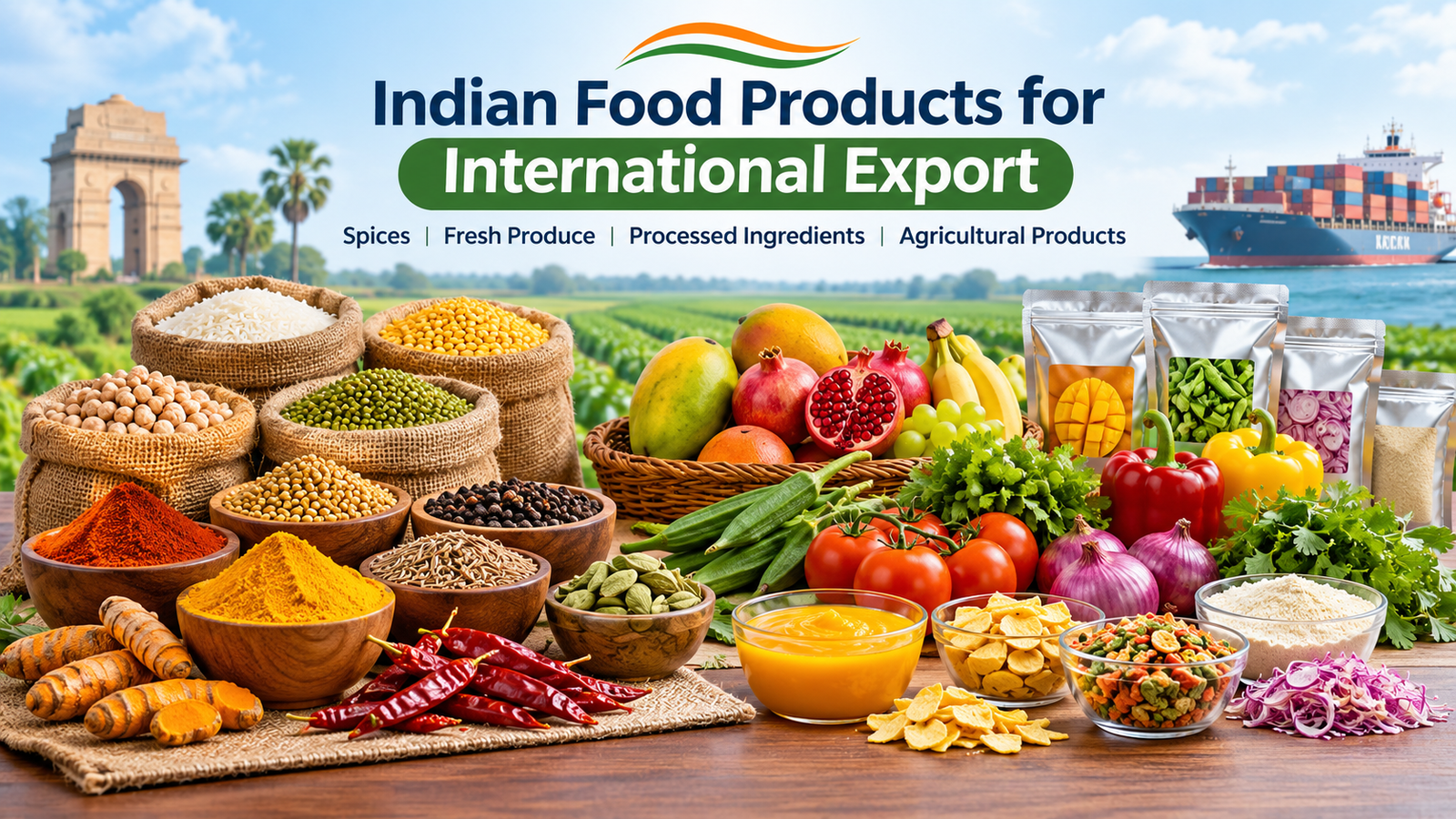
India has a diverse agricultural and food-processing industry that offers a wide range of products for international markets. From traditional spices and agricultural commodities to processed foods, fruit pulp, dehydrated ingredients and speciality food products, Indian suppliers serve the requirements of importers, wholesalers, distributors, retailers and food manufacturers across different countries. For international businesses, sourcing food products from India can provide access to multiple product categories through an established network of manufacturers, farmers, processors and exporters. However, selecting suitable products and suppliers requires an understanding of product specifications, quality standards, packaging, food safety requirements and international shipping procedures. Many international buyers prefer working with an organised sourcing partner instead of independently contacting multiple manufacturers. This can make supplier communication, product coordination and export arrangements easier to manage. In this guide, we explore the different food products available from India, their commercial applications, quality considerations, export requirements and the factors international buyers should evaluate before choosing an Indian food sourcing partner.
Executive Key Takeaways
- Wide Product Range: International buyers can explore Indian spices, fresh fruits, vegetables, dry fruits, edible nuts, fruit pulp, freeze-dried ingredients and dehydrated food products.
- Multiple Commercial Applications: Indian food products serve food manufacturing, bakery, beverage, snack, confectionery, retail, restaurant and foodservice industries.
- Quality and Food Safety: Buyers should confirm product specifications, quality parameters, supplier credentials, applicable certifications and destination-market requirements.
- Packaging and Logistics: Product-specific packaging, shelf-life management, storage conditions and suitable sea or air freight arrangements are important for export shipments.
- Sourcing Partner Selection: An organised sourcing partner can help coordinate supplier communication, product requirements, samples, documentation and export logistics.
Why Is India an Important Destination for Food Product Sourcing?
India is recognised for its agricultural diversity, traditional food ingredients and growing food-processing capabilities. Different climatic conditions, agricultural regions and production practices support a wide variety of food products.
The country supplies raw agricultural commodities as well as processed and value-added food ingredients to international markets.
Several factors make India an interesting sourcing destination for global food businesses.
India produces numerous agricultural commodities, including fruits, vegetables, spices, grains, pulses and other food ingredients. This diversity allows international buyers to explore different product categories based on their business requirements and target markets.
India has a developing food-processing ecosystem covering cleaning, grading, sorting, drying, freezing, pulping, packaging and other processing activities. These capabilities help suppliers offer products in different commercial formats, including fresh, frozen, powdered, dehydrated and processed forms.
Indian food ingredients are used in different international cuisines and food manufacturing applications. Turmeric, cumin, coriander, chilli, ginger, cardamom and other traditional ingredients are relevant to spice manufacturers, food processors and distributors.
International buyers can explore sourcing opportunities through agricultural producers, food-processing facilities, manufacturers and merchant exporters. A well-organised sourcing arrangement can help businesses identify suitable suppliers according to product specifications, quality expectations and order quantities.
Apart from fresh agricultural commodities, Indian suppliers also offer processed products such as fruit pulp, freeze-dried ingredients, dehydrated vegetables and food powders. These products are useful for businesses that require ingredients in convenient commercial formats.
What Food Products Can International Buyers Source from India?
India offers several food product categories for international sourcing. The right product depends on the buyer's industry, target market, processing requirements and customer preferences.
Below are some important categories that international importers and food businesses can explore.
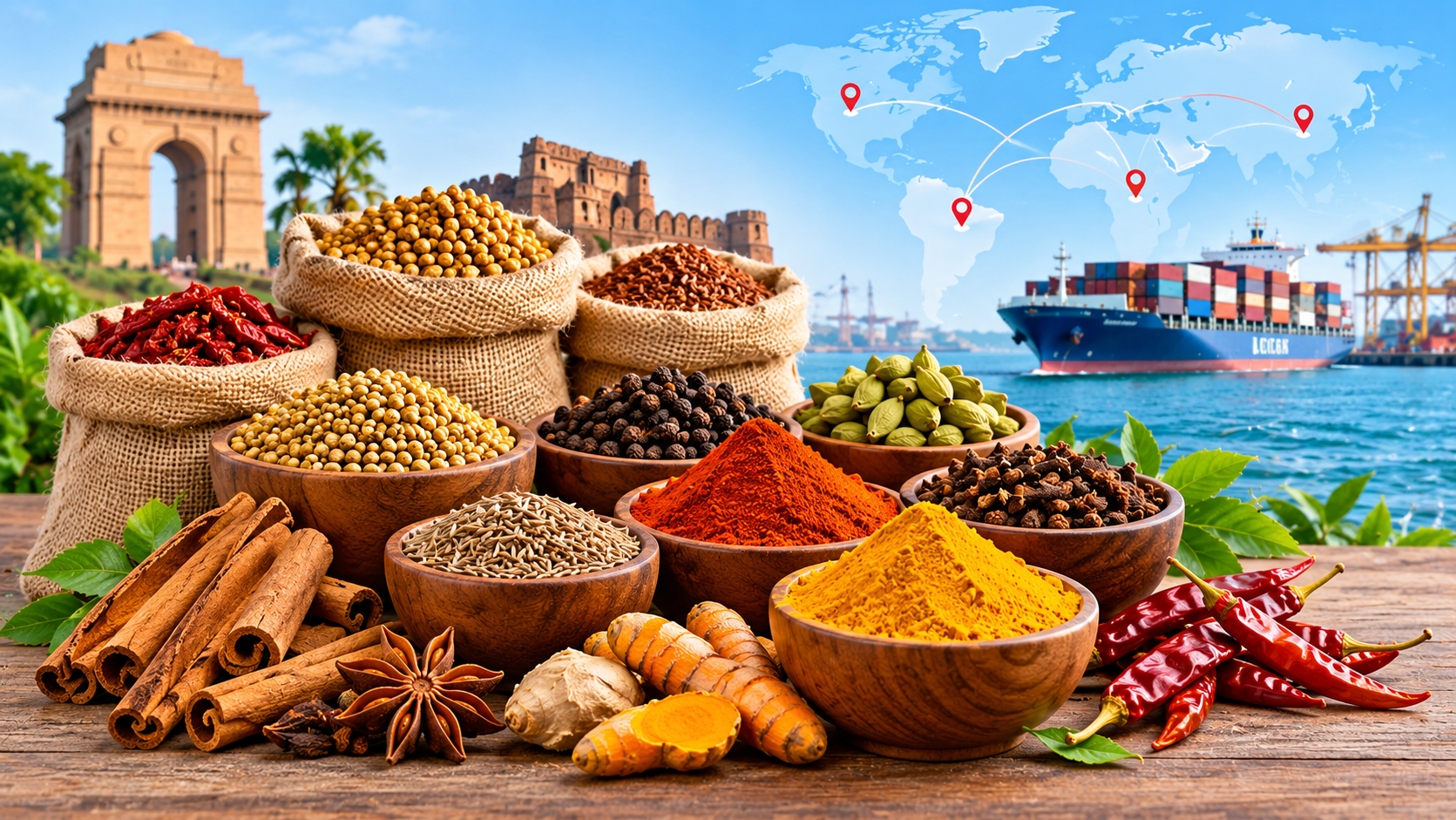
Indian spices are widely used in food manufacturing, retail packaging, restaurants and commercial kitchens. They contribute flavour, aroma, colour and distinctive characteristics to different food preparations.
Some commonly sourced Indian spices include:
International businesses looking to source these ingredients can explore Indian suppliers according to their required specifications and packaging preferences.
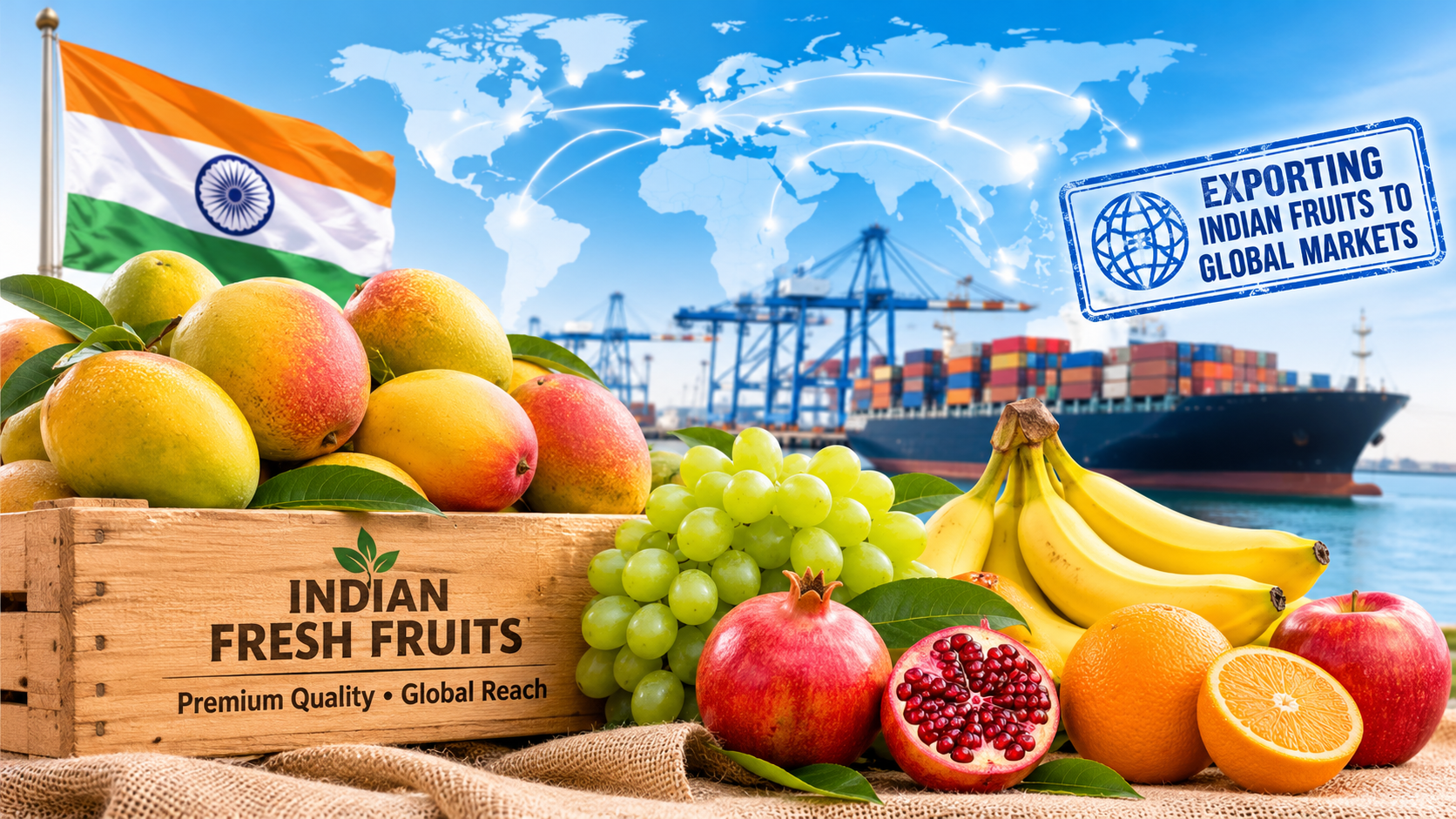
India produces different tropical and seasonal fruits that serve international retail, wholesale and food distribution markets. Fresh fruits require suitable harvesting, sorting, grading, packaging and transportation arrangements to maintain their quality.
Some important fruit categories include:
Fresh fruit sourcing requires careful coordination because seasonal availability, product maturity and transportation conditions can influence the final quality.
Indian vegetables are used by food distributors, wholesalers, supermarkets, restaurants and food-processing businesses. Some commonly sourced categories include:
Fresh vegetables generally require suitable packaging, handling and transportation arrangements according to the product and destination.
Dry fruits and edible nuts are important ingredients in the bakery, confectionery, snack and food-processing industries. International buyers can explore different Indian sourcing options according to product grade, variety, quality and commercial requirements.
For bulk sourcing, importers should confirm the product specifications, packaging, storage and food safety requirements before placing orders.
Freeze-dried food products are gaining attention across different food manufacturing and convenience food applications. Freeze-drying, also known as lyophilisation, is a preservation technique in which frozen moisture is removed primarily through sublimation under controlled vacuum conditions. The process helps produce lightweight food ingredients with low moisture content.
Some applications include:
Freeze-dried ingredients are useful for manufacturers looking for specific texture, flavour and rehydration characteristics. Before purchasing these products, buyers should evaluate moisture content, water activity, packaging barrier properties, microbiological quality and shelf-life specifications.
Dehydrated vegetables are used in commercial food production because they provide convenient handling and storage compared with their fresh counterparts. The dehydration process removes most of the moisture from vegetables through controlled drying methods.
Common products include:
These products are generally available in different grades and particle sizes according to supplier capabilities and buyer specifications.
Processed fruit products offer international food manufacturers an alternative to handling fresh fruits directly. Fruit pulp is used in beverages, ice creams, dairy products, desserts and other food preparations.
Chikoo Pulp
Chikoo, also known as sapota, is a tropical fruit with a naturally sweet taste and soft texture. Its pulp can be used in:
Depending on the product and commercial specifications, chikoo pulp may be supplied in aseptic or frozen formats.
Other Processed Fruit Ingredients
International buyers may also explore other fruit-based ingredients according to their requirements, including different fruit pulps and processed preparations. Important purchasing parameters include Brix level, acidity, colour, consistency, microbiological quality, packaging and shelf life.
Which Indian Food Products Are Suitable for Different Industries?
The suitability of a food product depends on its intended commercial application. Different industries require different product specifications and packaging formats.
| Industry | Suitable food product categories |
|---|---|
| Food manufacturing | Spices, dehydrated ingredients, fruit pulp |
| Bakery industry | Dry fruits, freeze-dried fruits, fruit ingredients |
| Beverage industry | Fruit pulp, spices, selected food powders |
| Snack manufacturing | Nuts, dehydrated vegetables, freeze-dried fruits |
| Restaurant and foodservice | Spices, fresh fruits, fresh vegetables |
| Retail distribution | Packaged spices, dry fruits, processed foods |
| Instant food manufacturing | Onion flakes, garlic powder, dehydrated ingredients |
| Confectionery | Nuts, fruit pulp and freeze-dried ingredients |
Businesses should select products according to their production requirements, target consumers and applicable food regulations.
What Should International Buyers Check Before Sourcing Food Products from India?
Selecting the right product is only one part of international sourcing. Buyers should also evaluate the supplier, quality standards, packaging and export requirements.
Before requesting quotations, clearly define the required product.
Important specifications may include:
Clear specifications help suppliers understand the buyer's expectations and provide more accurate quotations.
Food safety is an important consideration when purchasing products for international markets. Buyers should evaluate the applicable quality parameters according to the commodity.
For example, spice products may require checks for moisture, purity, contaminants and pesticide residues. Fresh produce may require grading, maturity checks, residue compliance and phytosanitary requirements. Processed food ingredients may require microbiological testing, moisture analysis and other relevant quality assessments.
International buyers should review the supplier's business credentials, manufacturing capabilities and product experience. They may also request samples, quality reports, relevant certifications and information about the production or processing facility. The suitability of any certification should be assessed according to the product and destination-market requirements.
Packaging protects food products during storage and transportation. Different products require different packaging arrangements.
Fresh fruits and vegetables may require ventilated cartons or suitable crates. Spices and dehydrated products may require moisture-resistant food-grade packaging. Fruit pulp may require suitable aseptic or frozen packaging.
International buyers should also confirm applicable labelling requirements, including ingredient information, country of origin, batch details, dates and other mandatory declarations.
Shelf life depends on the product, processing method, packaging, storage conditions and handling. For example, fresh fruits have different storage requirements from dry spices or dehydrated ingredients. Buyers should confirm the remaining shelf life at dispatch and the appropriate storage conditions for the intended transportation method.
Food imports are regulated differently across international markets. Depending on the destination, importers may need to consider food safety regulations, ingredient restrictions, labelling standards, pesticide residue limits, health certificates and other product-specific requirements. It is important to verify these requirements before confirming an order.
How Does the Food Product Export Process Work from India?
The export process involves multiple stages that connect the Indian supplier with the international buyer.
Step 1: Product Requirement Discussion
The buyer shares the required product category, specifications, quantity, packaging preferences and destination country.
Step 2: Supplier Identification
The exporter identifies suitable manufacturers, agricultural suppliers or food processors according to the requirements.
Step 3: Quotation and Sample Coordination
Product pricing, specifications and samples are discussed where applicable. The buyer evaluates the product before confirming the commercial arrangement.
Step 4: Order Confirmation
Once the buyer approves the product, the parties confirm quantities, pricing, payment terms, packaging and delivery responsibilities.
Step 5: Product Procurement and Quality Checks
The products are sourced from the selected suppliers and evaluated against the agreed requirements.
Step 6: Packaging and Documentation
Products are prepared for export and relevant documentation is coordinated. Common documents may include commercial invoices, packing lists and shipping bills. Additional certificates may be required depending on the commodity and destination.
Step 7: Freight and Shipment Arrangements
The shipment is planned through sea freight or air freight according to cargo requirements and delivery expectations. Fresh and temperature-sensitive products may require specialised transportation arrangements.
Step 8: International Shipment
After applicable export procedures are completed, the cargo is dispatched towards the destination market. The importer coordinates the required destination customs procedures and final delivery.
Why Do International Buyers Work with Merchant Exporters?
Sourcing multiple products from different Indian manufacturers can involve significant coordination. A merchant exporter or sourcing partner can help simplify the process by connecting international buyers with suitable suppliers and coordinating commercial and export-related activities.
Some important advantages include:
Access to Multiple Product Categories
Buyers may explore different product categories through an established sourcing network rather than contacting each manufacturer separately.
Simplified Supplier Communication
Coordinating with several suppliers can become time-consuming. An export sourcing partner can help streamline product discussions and order coordination.
Better Understanding of Export Requirements
An experienced export partner may help buyers understand the documentation, packaging and shipment requirements applicable to their products.
Flexible Sourcing Arrangements
Depending on supplier capabilities and commercial terms, buyers may explore different product specifications, quantities and packaging formats.
Support for International Trade Coordination
From initial inquiry to shipment arrangements, coordinated communication can help buyers manage different stages of international sourcing.
The actual services offered should always be confirmed before entering into a commercial agreement.
How Transtake AquaGlobal Helps International Buyers Source Food Products from India
Transtake AquaGlobal connects international buyers with Indian manufacturers, agricultural suppliers and food processors across different sourcing categories.
Its product portfolio covers Indian spices, fresh fruits, vegetables, dry fruits, freeze-dried ingredients, dehydrated products and processed food categories.
For international businesses, this sourcing approach provides an opportunity to explore different Indian food products through a coordinated export partner.
Whether a buyer is looking for bulk spices, fresh agricultural produce, processed fruit ingredients or specialised food products, the first step is to define the required specifications and commercial quantities.
Transtake AquaGlobal supports product sourcing and export coordination according to buyer requirements and the capabilities of its supplier network.
The company also offers export logistics-related coordination, helping international buyers discuss transportation and shipment arrangements for their sourcing requirements.
Businesses interested in sourcing Indian food products can connect with Transtake AquaGlobal to discuss product availability, specifications, packaging and international shipping requirements.
How to Select the Right Indian Food Products for Your Business
Choosing the right food products requires more than following market trends. Importers should consider their target consumers, product applications, purchasing budgets, storage facilities and destination-country regulations.
For example, a food manufacturer producing instant meals may prefer dehydrated onion, garlic powder and spice ingredients. A beverage manufacturer may be interested in fruit pulp and selected fruit-based ingredients. A retail distributor may focus on packaged spices, dry fruits and fresh agricultural products. Similarly, a snack manufacturer may explore nuts, freeze-dried fruits and other processed ingredients.
Before placing an order, buyers should evaluate samples, confirm quality parameters and understand the complete landed cost, including freight, insurance, customs duties and other applicable expenses.
A well-planned sourcing strategy can help businesses develop more consistent supply arrangements and build long-term relationships with Indian suppliers.
Conclusion
India offers extensive opportunities for international buyers looking to source agricultural commodities, traditional ingredients and processed food products. From spices and fresh produce to dry fruits, freeze-dried ingredients and dehydrated vegetables, the country provides multiple sourcing options for different food industries.
However, successful international sourcing requires careful attention to product specifications, supplier selection, quality control, packaging, documentation and transportation.
Working with an organised sourcing partner can make it easier to explore different product categories and coordinate the export process.
Transtake AquaGlobal supports international buyers looking to connect with Indian manufacturers, suppliers and food processors for their global sourcing requirements.
If your business is planning to source food products from India, discuss your product requirements and explore suitable sourcing opportunities with Transtake AquaGlobal.