Sourcing Intelligence & Sourcing Guide

How to Choose a Reliable Merchant Exporter in India for Global Sourcing

A complete guide for international buyers: Understanding merchant exporters, Indian product categories, supplier verification, quality control, export documentation, and international shipping.

Sourcing Experts
09 Nov, 2026
8 Min Read
APEDA Verified
Quick Response

Quick Sourcing Inquiry

Desk Active
WhatsApp
100% Confidential 24H Turnaround Verified Exporter

India has become an important sourcing destination for international businesses looking for agricultural commodities, food products, spices, processed ingredients, dry fruits, and other commercially traded goods. With a diverse manufacturing base, established agricultural supply chains, and growing food-processing capabilities, India offers significant opportunities for importers, wholesalers, distributors, and manufacturers. Working with a reliable merchant exporter can simplify supplier coordination, product sourcing, quality requirements, documentation, and international shipment arrangements.

Executive Key Takeaways

  • Understanding Merchant Exporters: A merchant exporter sources products from Indian manufacturers, producers, and suppliers and exports them to international buyers.
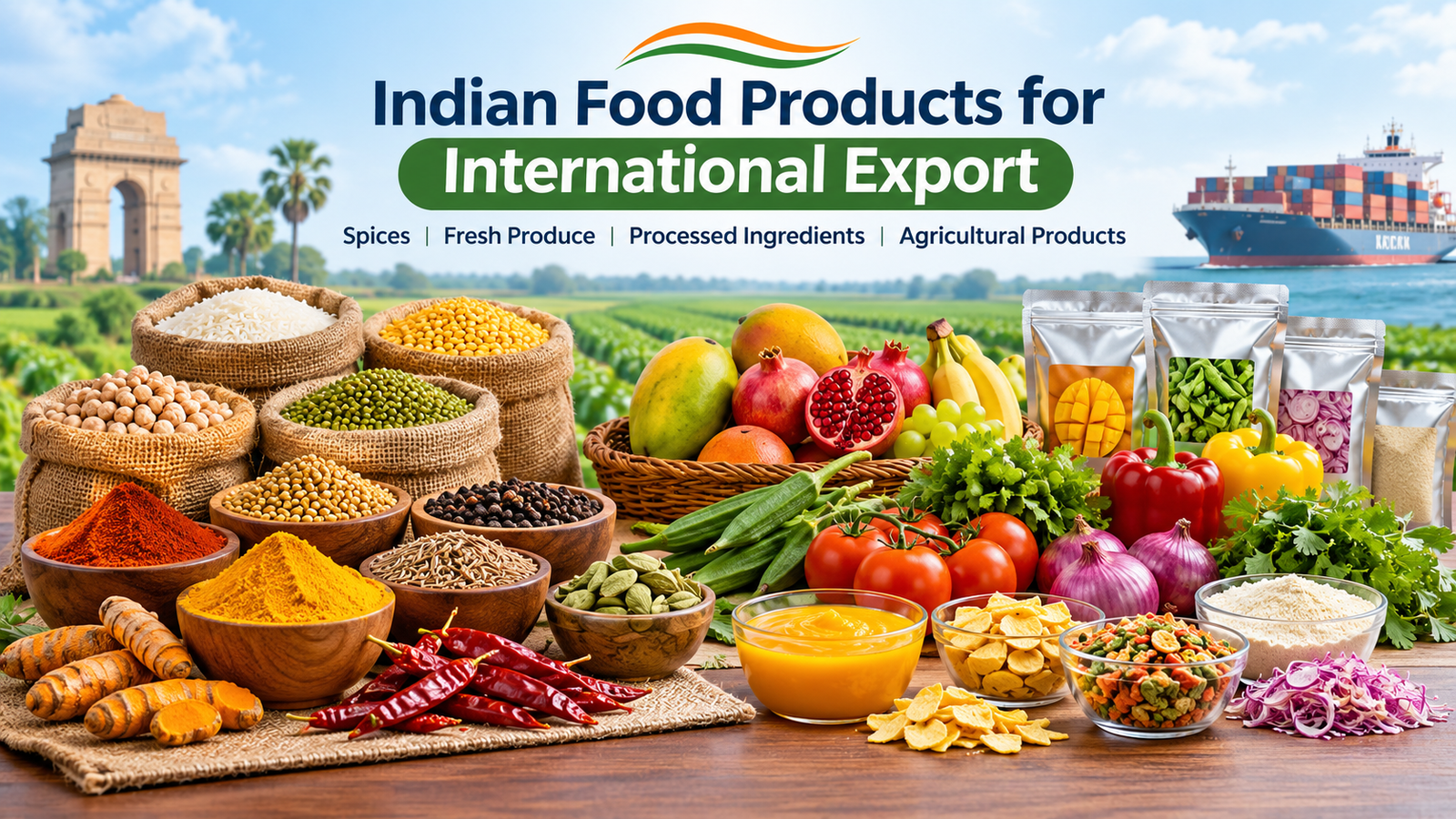
  • Multiple Product Categories: International buyers can source Indian spices, fresh fruits, vegetables, dry fruits, freeze-dried foods, dehydrated ingredients, and processed food products.
  • Supplier Verification: Check business registration, Importer Exporter Code (IEC), supplier relationships, product knowledge, and quality control procedures.
  • Quality and Packaging: Evaluate product specifications, moisture levels, purity, microbiological parameters, packaging materials, and transportation requirements.
  • Export Documentation: Understand important documents such as IEC, commercial invoice, packing list, shipping bill, bill of lading, airway bill, and applicable certificates.
  • International Shipping: Coordinate freight, customs procedures, shipment documentation, and delivery requirements according to the destination country.
01

What Is a Merchant Exporter in India?

A merchant exporter is a business that purchases or sources products from manufacturers, producers, or other suppliers and exports them to international buyers.

Unlike a manufacturer exporter, who generally exports products manufactured at its own facility, a merchant exporter works with external manufacturers and suppliers to fulfil export orders.

For example, an international food distributor looking to purchase Indian spices, dehydrated vegetables, and processed fruit products may not want to contact several manufacturers individually. A merchant exporter can coordinate sourcing requirements across suitable suppliers and help manage the commercial and logistical aspects of the transaction.

The merchant export model is particularly useful for businesses that want access to multiple Indian product categories without establishing their own sourcing operations in India.

02

How Does a Merchant Export Company Work?

A merchant export company generally acts as an intermediary between Indian manufacturers or suppliers and international customers.

The process begins when a buyer shares product requirements, including specifications, quantity, packaging preferences, and destination details.

The exporter then identifies suitable suppliers and coordinates quotations, product samples, and commercial discussions. Once the buyer approves the product and commercial terms, the order moves towards procurement, quality checks, packaging, documentation, and shipment arrangements.

The major activities may include:

Identifying suitable Indian manufacturers and suppliers.
Understanding international buyer requirements.
Coordinating product specifications and quotations.
Arranging samples and product evaluations.
Managing supplier communication.
Coordinating packaging and labelling requirements.
Supporting applicable export documentation.
Arranging freight and shipment coordination.
Providing shipment-related updates.

This coordinated approach helps buyers manage international sourcing with fewer communication challenges. The exact responsibilities depend on the business model and agreed contractual terms.

03

Why Do International Buyers Choose India for Product Sourcing?

India offers a broad range of products across agriculture, food processing, spices, traditional ingredients, and manufacturing.

Its geographical diversity supports the production of different agricultural commodities, while its processing industry provides value-added products for international markets.

Key advantages include:

Diverse Agricultural Production: India produces fruits, vegetables, spices, grains, pulses, and oilseeds for domestic and international markets.
Established Food Processing Industry: India's food-processing ecosystem covers cleaning, grading, sorting, drying, freezing, pulping, packaging, and other value-addition activities.
Multiple Product Categories: Buyers can explore fresh produce, dry fruits, spices, dehydrated ingredients, freeze-dried foods, and traditional food products.
Flexible Sourcing Opportunities: Export sourcing partners can help identify suppliers according to product grades, packaging requirements, order quantities, and commercial specifications.
Export Infrastructure: Established ports, airports, container facilities, and transportation networks support international trade.
04

What Products Can International Buyers Source from India?

India offers opportunities across several export categories. Some important product segments for international importers and distributors include:

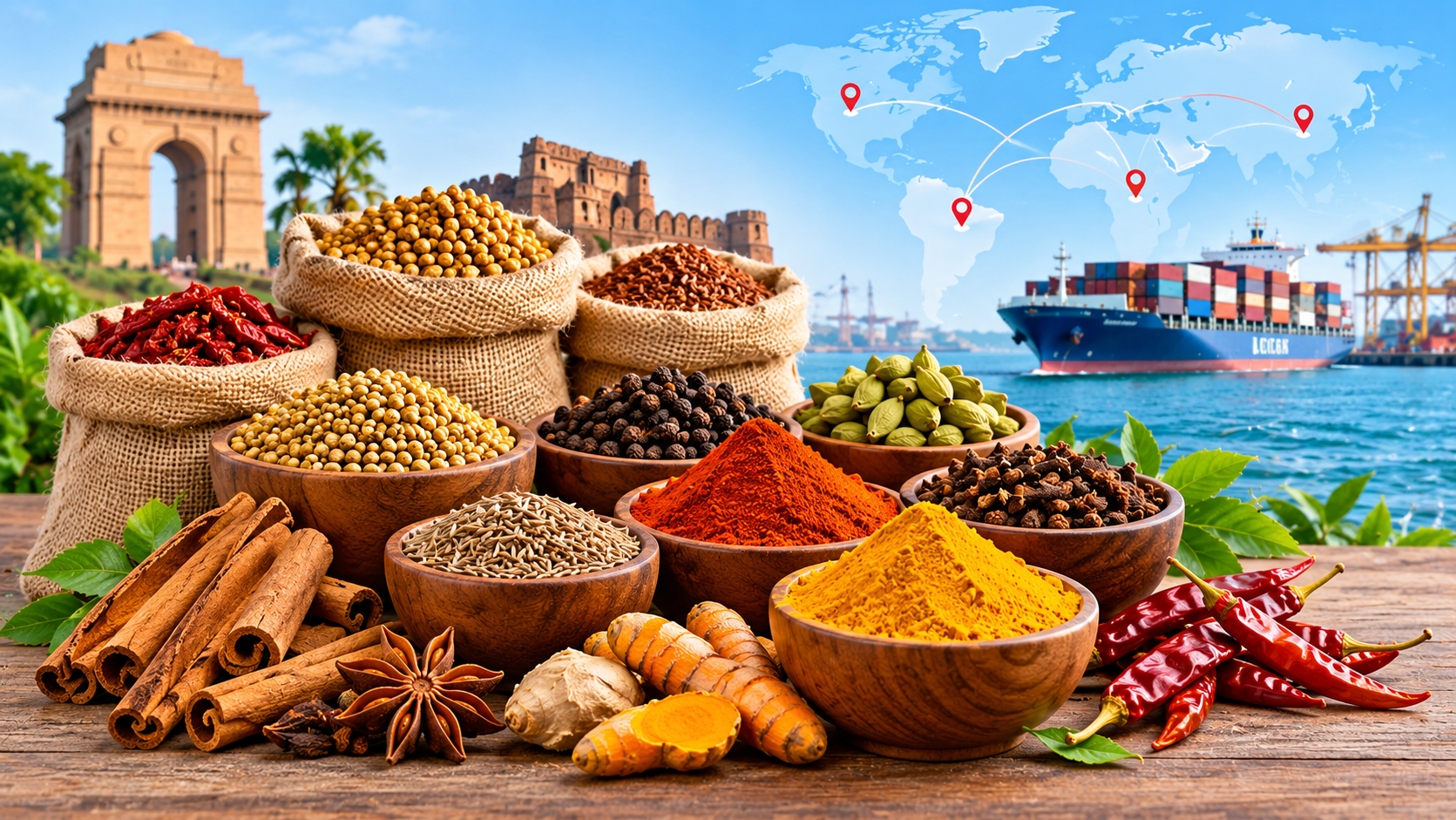
Indian Spices and Seasonings: Turmeric, cumin seeds, coriander seeds, red chilli, black pepper, cardamom, cloves, and fennel seeds. Buyers should evaluate aroma, colour, moisture, purity, product grade, and applicable food safety parameters.
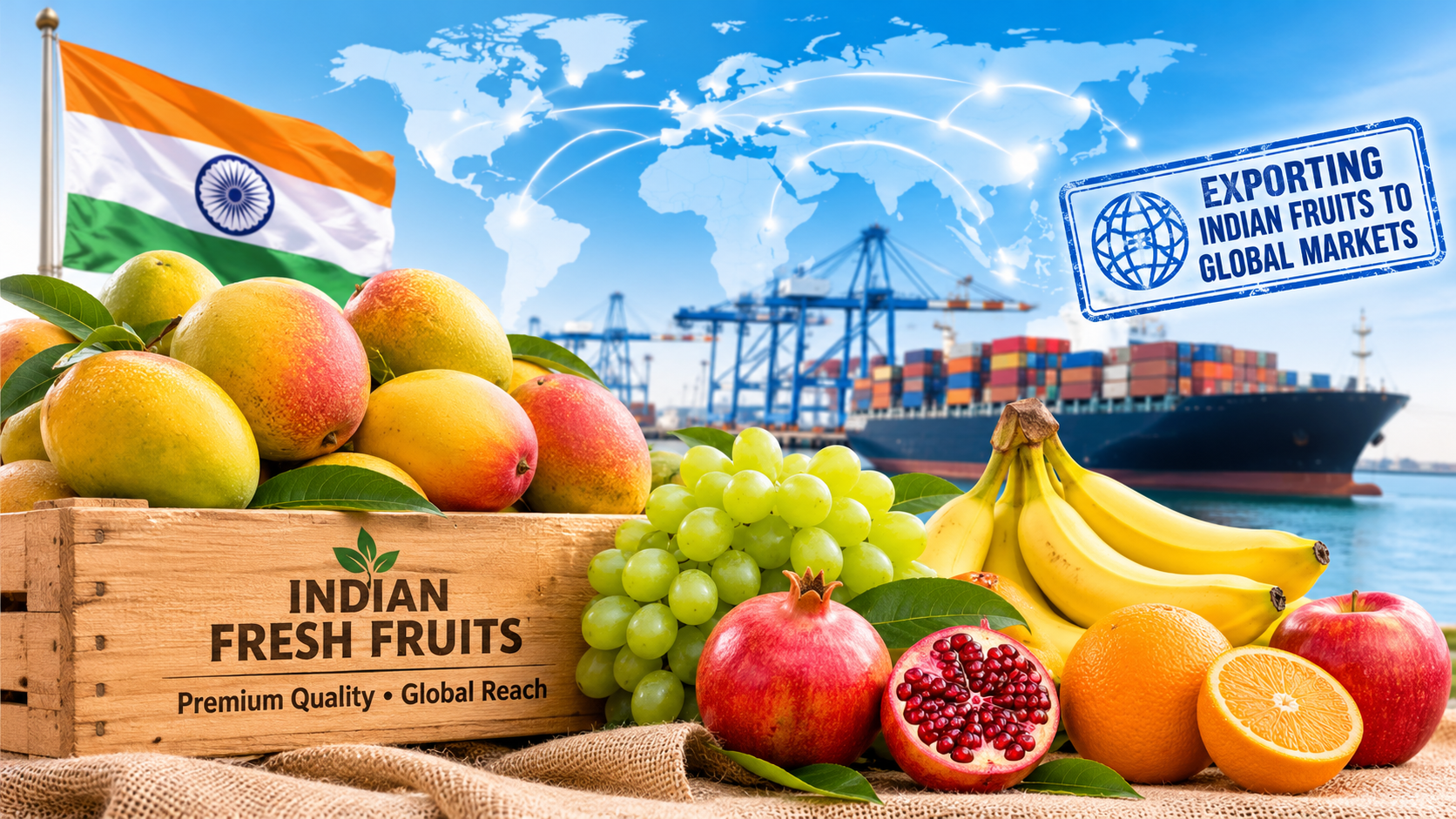
Fresh Fruits and Vegetables: Mangoes, pomegranates, bananas, onions, potatoes, green chillies, and okra. Fresh produce requires suitable grading, packaging, handling, and transportation conditions. Temperature-sensitive commodities may require cold-chain arrangements.
Indian Dry Fruits and Edible Nuts: Cashews, almonds, and walnuts. Buyers should consider product grades, kernel appearance, moisture, freshness, packaging, and storage conditions.
Freeze-Dried Food Products: Freeze-dried fruits and other ingredients are used in snack manufacturing, breakfast cereals, confectionery, beverages, and specialised food formulations.
Dehydrated Vegetables: Onion flakes, onion powder, garlic powder, and dehydrated ginger are commonly used in instant foods, seasoning mixes, soups, sauces, and ready-to-cook products.
Processed Food Products: Fruit pulps, traditional ingredients, food preparations, and other value-added products. Chikoo pulp, for example, can be used in beverages, milkshakes, ice creams, and dessert formulations depending on the product specification.
05

What Is the Difference Between a Merchant Exporter and a Manufacturer Exporter?

International buyers should understand the difference between these two business models before selecting a sourcing partner.

Business Model: A merchant exporter sources products from external suppliers, whereas a manufacturer exporter generally exports products manufactured at its own facility.
Supplier Network: Merchant exporters may work with multiple manufacturers, while manufacturer exporters primarily rely on their own production.
Product Categories: Merchant exporters can cover multiple product categories depending on their supplier network, whereas manufacturer exporters generally focus on their manufacturing range.
Production Facility: A merchant exporter does not necessarily own a manufacturing facility, while a manufacturer exporter usually operates its own production facility.
Sourcing Flexibility: Merchant exporter flexibility depends on its supplier network, while manufacturer exporter flexibility depends on its production capabilities.

Neither model is automatically better. The right choice depends on the buyer's product requirements, order size, quality expectations, and sourcing strategy.

06

How to Choose a Reliable Merchant Exporter in India

Selecting an export partner is an important decision because product quality, documentation, and shipment coordination can directly influence business operations.

Consider these important factors before finalising an Indian merchant exporter:

Check Business Registration and Export Credentials: Review the company's legal business details and relevant export credentials. The Importer Exporter Code (IEC), issued by the Directorate General of Foreign Trade, is generally required for Indian businesses undertaking export activities, subject to applicable exemptions.
Evaluate Product Knowledge: An export partner should understand product grades, specifications, packaging requirements, and storage conditions.
Ask About Supplier Verification: Understand how the exporter identifies and evaluates manufacturing and processing partners. Ask about product samples, manufacturing details, quality checks, and the ability to accommodate specific product specifications.
Review Quality Control Procedures: Depending on the product, checks may include moisture content, purity, appearance, microbiological parameters, residue limits, and packaging integrity.
Understand Packaging Capabilities: Fresh fruits may require ventilated cartons, dehydrated ingredients may require moisture-barrier packaging, and liquid fruit pulp may require suitable aseptic or frozen packaging systems.
Check Export Documentation Knowledge: Documentation depends on the product, destination country, buyer requirements, and applicable regulations.
Evaluate Communication and Transparency: A reliable business partner should provide clear quotations, confirm agreed specifications, and communicate changes that may affect shipment schedules.
07

How Does the Export Process Work from India?

The export process generally involves several stages, from the initial buyer inquiry to international shipment.

Step 1: Buyer Inquiry and Requirement Discussion

The international buyer shares product details, required quantity, destination country, packaging preferences, and expected delivery requirements.

Step 2: Supplier Identification

The exporter identifies suitable manufacturers or suppliers based on product specifications and commercial requirements.

Step 3: Quotation and Sample Approval

The exporter coordinates pricing, product specifications, and samples where applicable. The buyer evaluates the product and confirms whether it meets the required standards.

Step 4: Purchase Order and Commercial Agreement

Once the product and pricing are finalised, the buyer and exporter confirm the order, payment terms, delivery terms, and other contractual details.

Step 5: Procurement and Quality Checks

Products are procured from selected suppliers and checked against agreed specifications. The nature and extent of inspection depend on the product and contract.

Step 6: Packaging and Labelling

Products are prepared for international transportation according to relevant packaging and labelling requirements.

Step 7: Export Documentation and Customs Procedures

Applicable documents are prepared and export customs procedures are completed.

Step 8: Freight and International Shipment

The shipment is transported through the selected logistics arrangement. Sea freight is commonly used for larger shipments, while air freight may be considered for urgent or time-sensitive cargo.

Step 9: Shipment Coordination and Delivery

The buyer receives relevant shipping information and coordinates import clearance and delivery at the destination.

08

What Are the Important Documents Required for Exporting from India?

Export documentation plays an important role in international trade. Specific documents depend on the nature of the product, destination country, shipping method, and applicable regulations.

Commonly used export documents include:

Importer Exporter Code (IEC): An important identification and authorisation requirement for Indian businesses undertaking exports, subject to applicable exemptions.
Commercial Invoice: Provides transaction details, including buyer, seller, product description, quantity, and value.
Packing List: Contains shipment packaging information, including package count, weights, and dimensions.
Shipping Bill: A customs document used for processing export shipments.
Bill of Lading: A transport document issued for sea freight shipments.
Airway Bill: A transport document used for air cargo shipments.
Certificate of Origin: Establishes the country of origin of goods when required.
Phytosanitary Certificate: May be required for certain plants and plant products depending on destination-country regulations.

For food products, additional food safety, laboratory, health, or inspection-related documents may apply.

Buyers should verify current requirements before shipment rather than assuming that one documentation checklist applies to every product.

09

What Are the Common Challenges in International Sourcing from India?

International sourcing can involve several operational challenges, particularly when buyers work with multiple suppliers.

Supplier Coordination: Different manufacturers may have different production schedules, packaging systems, and communication processes. An export sourcing partner can help coordinate these requirements.
Product Quality Consistency: Maintaining consistent product specifications across multiple orders requires clear standards, appropriate inspections, and supplier coordination.
Seasonal Availability: Agricultural products may be affected by seasonal production, weather conditions, and harvest cycles. Importers should discuss availability and shipment planning in advance.
Documentation and Regulatory Compliance: Products entering different countries may be subject to different import regulations, food safety requirements, labelling standards, and inspection procedures.
Transportation and Shipment Delays: Port congestion, weather conditions, customs procedures, and transport availability can affect shipment timelines.

Proper planning and communication help businesses manage these sourcing and logistics challenges.

10

Why Work with Transtake AquaGlobal for Indian Product Sourcing?

Transtake AquaGlobal supports international businesses looking to source products from Indian manufacturers, agricultural suppliers, and food processors.

Its sourcing portfolio covers multiple categories, including:

Indian Spices
Fresh Fruits and Vegetables
Dry Fruits
Freeze-Dried Products
Dehydrated Food Ingredients
Processed Food Products

For international buyers, working with a sourcing partner can simplify the process of identifying suitable Indian suppliers and coordinating product requirements.

Transtake AquaGlobal focuses on connecting buyers with relevant Indian sourcing networks while supporting commercial discussions, product coordination, and export-related logistics requirements.

Whether a business is looking for agricultural commodities, processed food ingredients, or multiple product categories, understanding sourcing requirements is the first step towards building a suitable supply arrangement.

Looking for an Indian sourcing partner for your business? Connect with Transtake AquaGlobal to discuss your product requirements, specifications, and international sourcing needs.

Visit the official website: https://transtakeglobal.com/
Need Reliable Sourcing & Export Support from India?

Consolidate your multi-product shipments with verified manufacturer audits, strict quality checks, and seamless customs clearance.

Request A Quote
Share This Article:
Previous All Next
Sourcing Knowledge Base

Related Export & Sourcing Guides

View All 4 Guides
How to Source Products From India – Complete Buyer Guide Sourcing
06 June, 2026 • 8 Min Read

How to Source Products From India – Complete Buyer Guide

A strategic roadmap for global importers: Supplier verification, quality benchmarks, contract terms, and supply chain security.

Read Full Article
What Food Products Can International Buyers Source from India? A Complete Guide Food Products
11 November, 2026 • 12 Min Read

What Food Products Can International Buyers Source from India? A Complete Guide

Explore Indian spices, fresh fruits, vegetables, dry fruits, freeze-dried ingredients, dehydrated products and processed food categories for international sourcing.

Read Full Article
How Export Logistics Works in India: A Complete Guide for International Buyers Export Logistics
12 November, 2026 • 10 Min Read

How Export Logistics Works in India: A Complete Guide for International Buyers

Understand the complete export logistics process in India, including freight options, export documentation, customs clearance, cold-chain transportation and international cargo coordination.

Read Full Article
Indian Spices for Global Markets: Types, Quality and Export Opportunities Spices
13 November, 2026 • 8 Min Read

Indian Spices for Global Markets: Types, Quality and Export Opportunities

Explore major Indian spices, commercial product forms, quality parameters, processing methods, packaging options and export considerations for international buyers.

Read Full Article
How to Choose a Reliable Merchant Exporter in India for Global Sourcing Export Guide
14 November, 2026 • 12 Min Read

How to Choose a Reliable Merchant Exporter in India for Global Sourcing

Understand how merchant exporters work, what products can be sourced from India, how the export process operates and what international buyers should evaluate before selecting an Indian export partner.

Read Full Article
How Indian Fresh Fruits Reach International Markets: Quality, Packaging and Export Process Fresh Fruits
15 November, 2026 • 12 Min Read

How Indian Fresh Fruits Reach International Markets: Quality, Packaging and Export Process

Understand the fresh fruit varieties available from India, the quality and compliance checks buyers should consider, and how packaging, documentation and export logistics help prepare perishable produce for international markets.

Read Full Article
Article link copied to clipboard!