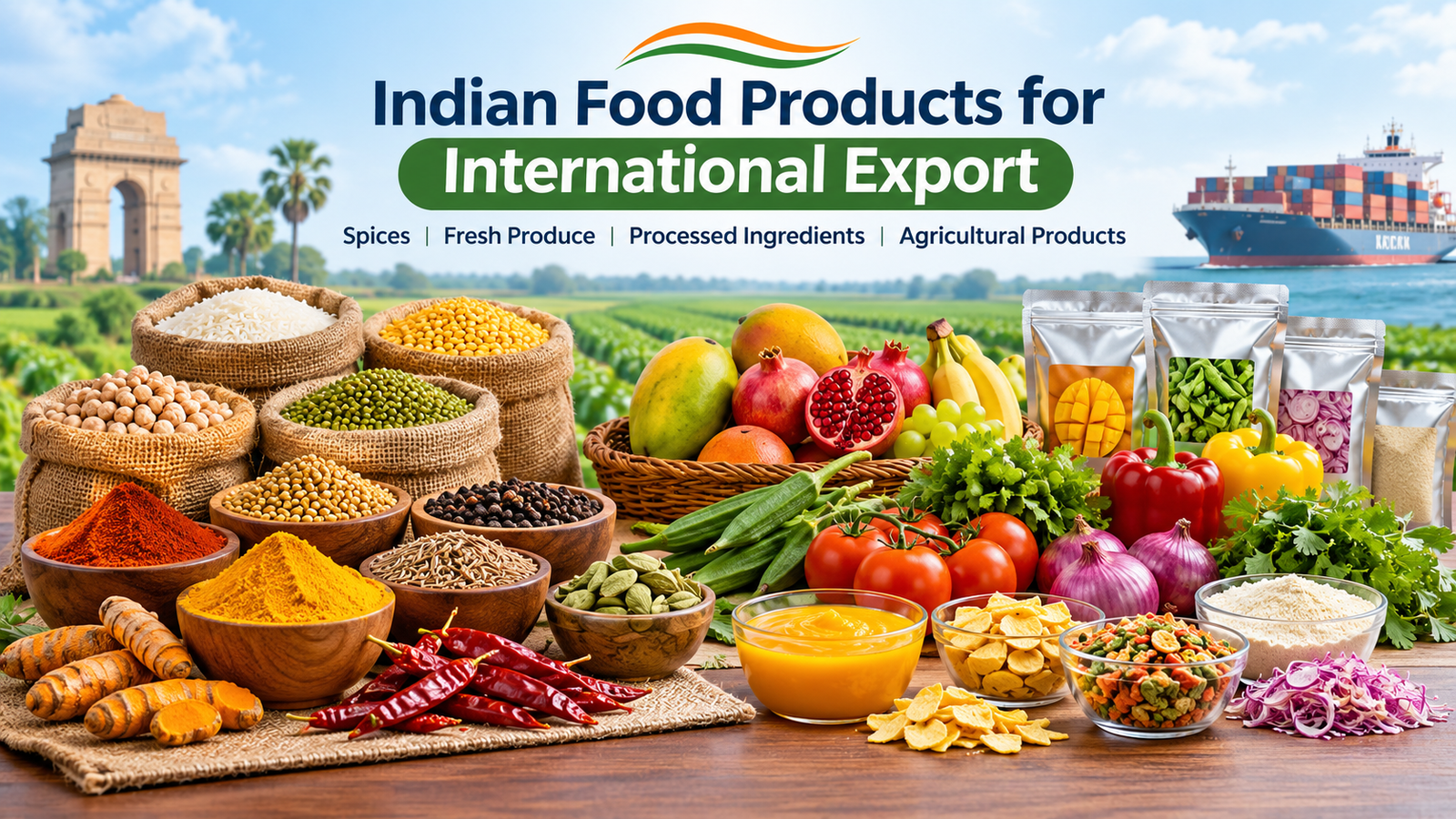
India has become an important sourcing destination for international businesses looking for agricultural commodities, food products, spices, processed ingredients and other commercially traded goods. With a diverse manufacturing base, established agricultural supply chains and growing food-processing capabilities, the country offers opportunities for importers, wholesalers, distributors and manufacturers across different industries. However, purchasing products from another country involves more than identifying a supplier and negotiating a price. International buyers must consider product specifications, supplier reliability, quality requirements, export documentation, packaging, transportation and destination-country regulations. Coordinating these activities independently can become complicated, particularly when sourcing multiple products from different manufacturers. A merchant exporter helps international buyers source products from Indian manufacturers, processors and suppliers while coordinating various stages of the export process. In this guide, we explore how merchant exporters work, what products can be sourced from India, how the export process operates and what international buyers should consider before selecting an Indian export partner.
Executive Key Takeaways
- Merchant Exporter Role: A merchant exporter sources products from Indian manufacturers, processors or suppliers and exports them to international buyers.
- Wide Sourcing Opportunities: International buyers can explore spices, fresh fruits, vegetables, dry fruits, freeze-dried products, dehydrated ingredients and processed food categories.
- Supplier and Quality Evaluation: Buyers should review supplier verification, product specifications, quality checks, packaging capabilities and relevant export credentials.
- Export Coordination: The process may involve quotations, samples, procurement, quality checks, packaging, documentation, freight and shipment coordination.
- Partner Selection: An experienced export partner can help simplify supplier communication, sourcing requirements and international shipment planning.
What Is a Merchant Exporter in India?
A merchant exporter is a business that purchases or sources products from manufacturers, producers or other suppliers and exports them to international buyers.
Unlike a manufacturer exporter, who generally exports products manufactured at its own facility, a merchant exporter works with external manufacturers and suppliers to fulfil export orders.
For example, an international food distributor looking to purchase Indian spices, dehydrated vegetables and processed fruit products may not want to contact several manufacturers individually. A merchant exporter can coordinate sourcing requirements across suitable suppliers and help manage the commercial and logistical aspects of the transaction.
The merchant export model is particularly useful for businesses that want access to multiple Indian product categories without establishing their own sourcing operations in India.
How Does a Merchant Export Company Work?
A merchant export company generally acts as an intermediary between Indian manufacturers or suppliers and international customers.
The working process begins when a buyer shares product requirements, including specifications, quantity, packaging preferences and destination details. The exporter then identifies suitable suppliers and coordinates quotations, product samples and commercial discussions.
Once the buyer approves the product and commercial terms, the order moves towards procurement, quality checks, packaging, documentation and shipment arrangements. The exact responsibilities depend on the business model and agreed contractual terms.
The major activities may include:
This coordinated approach helps buyers manage international sourcing with fewer communication challenges.
Why Do International Buyers Choose India for Product Sourcing?
India offers a broad range of products across agriculture, food processing, spices, traditional ingredients and manufacturing. Its geographical diversity supports the production of different agricultural commodities, while its processing industry provides value-added products for international markets.
India produces various agricultural commodities, including fruits, vegetables, spices, grains, pulses and oilseeds. International buyers can explore products according to their requirements, seasonal availability and destination-market demand.
India has a growing food-processing ecosystem covering cleaning, grading, sorting, drying, freezing, pulping, packaging and other value-addition activities. This creates opportunities for buyers looking for both raw agricultural products and processed food ingredients.
One advantage of sourcing from India is the availability of different product categories through established supplier networks. Businesses can explore fresh produce, dry fruits, spices, dehydrated ingredients, freeze-dried foods and traditional food products.
International businesses may have different requirements regarding product grades, packaging, order quantities and specifications. Working with an export sourcing partner can help buyers identify suppliers according to their commercial and product requirements.
India has established ports, airports, container facilities and transportation networks that support international trade. The appropriate logistics arrangement depends on shipment volume, destination, product characteristics and delivery timelines.
What Products Can International Buyers Source from India?
India offers opportunities across several export categories. The following are some important product segments for international importers and distributors.
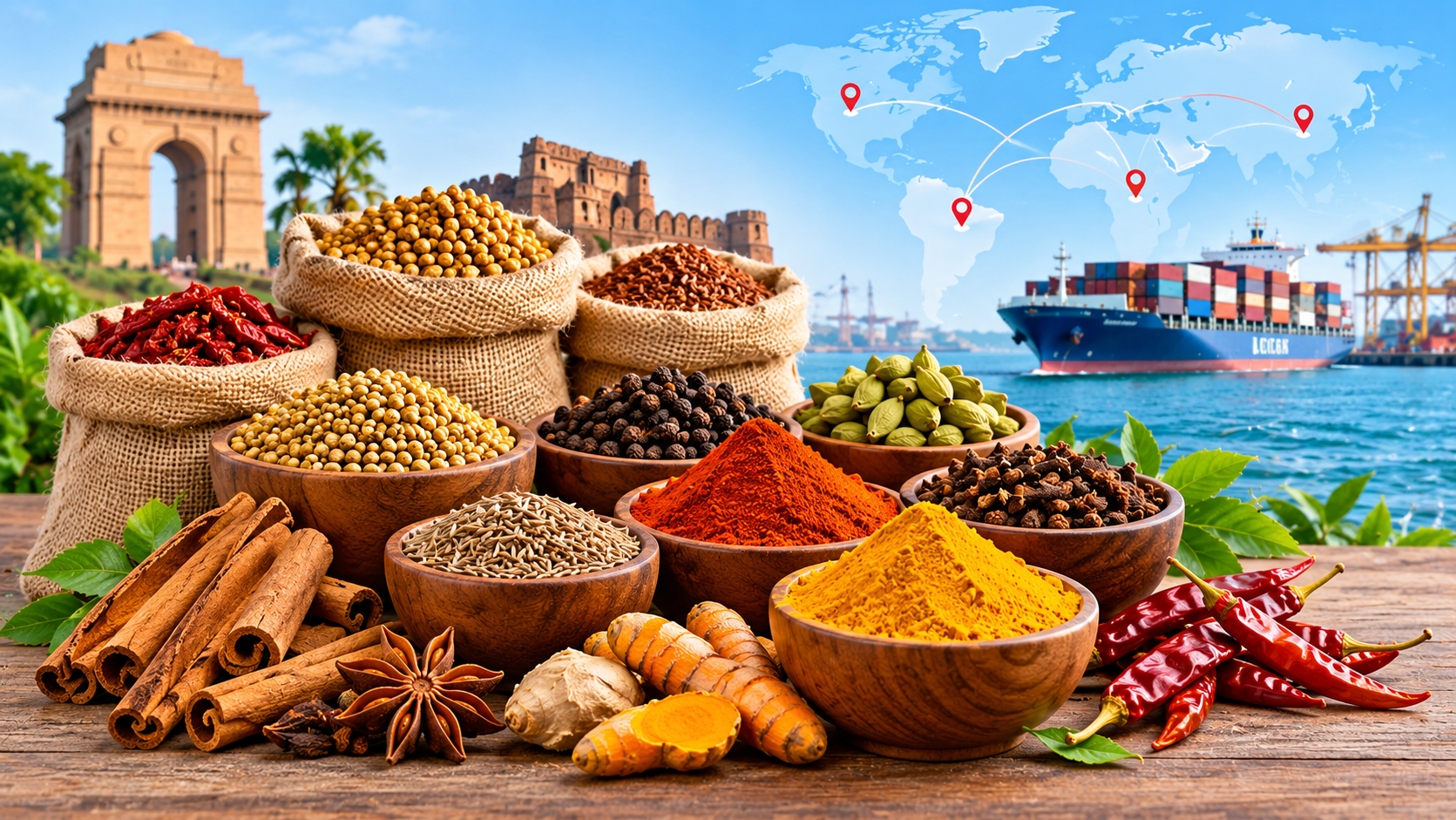
Indian spices are used in food manufacturing, retail packaging, restaurants and commercial kitchens. Commonly sourced spices include:
Buyers should evaluate factors such as aroma, colour, moisture, purity, product grade and applicable food safety parameters.
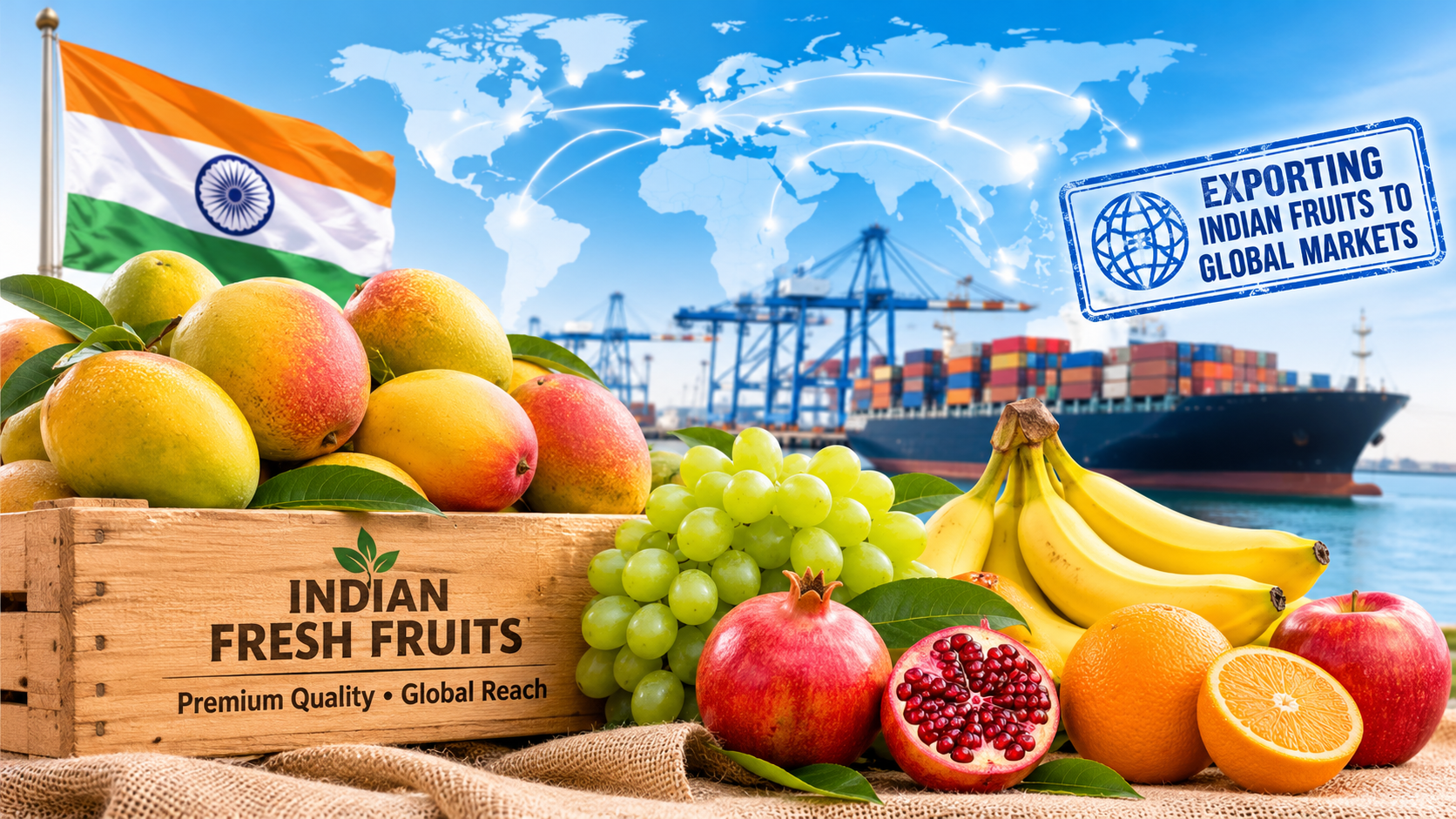
India produces several tropical and seasonal fruits and vegetables for domestic and international markets. Examples include mangoes, pomegranates, bananas, onions, potatoes, green chillies and okra.
Fresh produce requires suitable grading, packaging, handling and transportation conditions. For temperature-sensitive commodities, cold-chain arrangements may also be necessary.
Dry fruits and nuts are widely used in snacks, confectionery, bakery products and food manufacturing. Relevant sourcing categories include cashews, almonds and walnuts. International buyers should consider product grades, kernel appearance, moisture, freshness, packaging and storage conditions.
Freeze-drying is a preservation technique that removes ice from frozen food through sublimation under controlled vacuum conditions. Freeze-dried fruits and other ingredients are used in snack manufacturing, breakfast cereals, confectionery, beverages and specialised food formulations. Their lightweight structure and convenient handling make them suitable for various commercial applications.
Dehydrated vegetables are used in instant foods, seasoning mixes, soups, sauces and ready-to-cook products. Popular ingredients include onion flakes, onion powder, garlic powder and dehydrated ginger. Final product specifications may include moisture content, water activity, particle size, colour and microbiological parameters.
India also offers different processed food categories for international food businesses. These may include fruit pulps, traditional ingredients, food preparations and other value-added products. For example, chikoo pulp can be used in beverages, milkshakes, ice creams and dessert formulations, depending on the product specification.
What Is the Difference Between a Merchant Exporter and a Manufacturer Exporter?
International buyers should understand the difference before selecting a sourcing partner.
| Parameter | Merchant Exporter | Manufacturer Exporter |
|---|---|---|
| Business model | Sources products from external suppliers | Exports products manufactured at its own facility |
| Supplier network | May work with multiple manufacturers | Primarily relies on its own production |
| Product categories | Can cover multiple categories | Generally focuses on its manufacturing range |
| Production facility | Not necessarily owned | Usually operates its own manufacturing facility |
| Sourcing flexibility | Depends on supplier network | Depends on production capabilities |
| Main role | Sourcing and export coordination | Manufacturing and export |
Neither model is automatically better. The right choice depends on the buyer's product requirements, order size, quality expectations and sourcing strategy.
How to Choose a Reliable Merchant Exporter in India
Selecting an export partner is an important decision because product quality, documentation and shipment coordination can directly influence your business operations. Before finalising a supplier or exporter, consider the following factors.
Review the company's legal business details and relevant export credentials. For Indian exporters, the Importer Exporter Code (IEC) issued by the Directorate General of Foreign Trade is an important requirement for carrying out export activities, subject to applicable exemptions. Depending on the product category, additional registrations, licences or approvals may be necessary.
An export partner should understand the products being sourced, including their grades, specifications, packaging requirements and storage conditions. For food products, product-specific knowledge is especially important because different commodities have different quality and regulatory requirements.
Buyers should understand how the exporter identifies and evaluates its manufacturing and processing partners. Questions may include:
Quality expectations should be clearly established before placing an order. Depending on the product, checks may include moisture content, purity, appearance, microbiological parameters, residue limits and packaging integrity. For fresh produce, grading, maturity, freshness and handling conditions are also important.
International shipments require packaging suitable for the product and transportation method. Fresh fruits may require ventilated cartons, while dehydrated ingredients may require moisture-barrier packaging. Liquid fruit pulp may require suitable aseptic or frozen packaging systems. Always confirm packaging specifications before order confirmation.
Export documentation varies according to the product, destination country, buyer requirements and applicable regulations. An export partner should be familiar with the relevant documentation and coordinate with the appropriate authorities and service providers where required.
Clear communication helps avoid misunderstandings about pricing, specifications, shipment schedules and order status. A reliable business partner should provide clear quotations, confirm agreed specifications and communicate any changes that may affect the shipment.
How Does the Export Process Work from India?
The export process generally involves several stages, from the initial inquiry to international shipment.
Step 1: Buyer Inquiry and Requirement Discussion
The international buyer shares product details, required quantity, destination country, packaging preferences and expected delivery requirements.
Step 2: Supplier Identification
The exporter identifies suitable manufacturers or suppliers based on the product specifications and commercial requirements.
Step 3: Quotation and Sample Approval
The exporter coordinates pricing, product specifications and samples where applicable. The buyer evaluates the product and confirms whether it meets the required standards.
Step 4: Purchase Order and Commercial Agreement
Once the product and pricing are finalised, the buyer and exporter confirm the order, payment terms, delivery terms and other contractual details.
Step 5: Procurement and Quality Checks
Products are procured from the selected suppliers and checked against agreed specifications. The nature and extent of inspection depend on the product and contract.
Step 6: Packaging and Labelling
Products are prepared for international transportation according to the relevant packaging and labelling requirements.
Step 7: Export Documentation and Customs Procedures
Applicable documents are prepared and export customs procedures are completed. Common documents may include commercial invoice, packing list, shipping bill, bill of lading or airway bill, certificate of origin where applicable, product-specific certificates and declarations, and phytosanitary certificate where required for applicable agricultural products. Additional documents may be required depending on the destination market and product category.
Step 8: Freight and International Shipment
The shipment is transported through the selected logistics arrangement. Sea freight is commonly used for larger shipments, while air freight may be considered for urgent or time-sensitive cargo.
Step 9: Shipment Coordination and Delivery
The buyer receives relevant shipping information and coordinates import clearance and delivery at the destination.
What Are the Important Documents Required for Exporting from India?
Export documentation plays an important role in international trade. The specific documents depend on the nature of the product, destination country, shipping method and applicable regulations.
Some commonly used documents include:
For food products, additional food safety, laboratory, health or inspection-related documents may apply. Buyers should verify current requirements before shipment rather than assuming that one documentation checklist applies to every product.
What Are the Common Challenges in International Sourcing from India?
International sourcing can involve several operational challenges, particularly when buyers work with multiple suppliers.
Supplier Coordination
Different manufacturers may have different production schedules, packaging systems and communication processes. An export sourcing partner can help coordinate these requirements.
Product Quality Consistency
Maintaining consistent product specifications across multiple orders requires clear standards, appropriate inspections and supplier coordination.
Seasonal Availability
Agricultural products may be affected by seasonal production, weather conditions and harvest cycles. Importers should discuss availability and shipment planning in advance.
Documentation and Regulatory Compliance
Products entering different countries may be subject to different import regulations, food safety requirements, labelling standards and inspection procedures.
Transportation and Shipment Delays
Port congestion, weather conditions, customs procedures and transport availability can affect shipment timelines. Proper planning and communication help businesses manage these risks.
Why Work with Transtake AquaGlobal for Indian Product Sourcing?
Transtake AquaGlobal supports international businesses looking to source products from Indian manufacturers, agricultural suppliers and food processors. Its sourcing portfolio covers multiple categories, including Indian spices, fresh fruits, vegetables, dry fruits, freeze-dried products, dehydrated food ingredients and processed food products.
For international buyers, working with a sourcing partner can simplify the process of identifying suitable Indian suppliers and coordinating product requirements. Transtake AquaGlobal focuses on connecting buyers with relevant Indian sourcing networks while supporting commercial discussions, product coordination and export-related logistics requirements.
Whether a business is looking for agricultural commodities, processed food ingredients or multiple product categories, understanding the sourcing requirements is the first step towards building a suitable supply arrangement.
Looking for an Indian sourcing partner for your business? Connect with Transtake AquaGlobal to discuss your product requirements, specifications and international sourcing needs.
Visit the official website: https://transtakeglobal.com/
Conclusion
Choosing the right merchant exporter in India can make international sourcing more organised and manageable. From identifying suitable manufacturers to coordinating product specifications, documentation and transportation, an experienced export partner can help buyers navigate different stages of the export process.
However, successful sourcing also depends on clear product requirements, appropriate quality checks, regulatory compliance and transparent commercial arrangements.
For businesses exploring Indian agricultural products, spices, fresh produce, processed foods and other export categories, Transtake AquaGlobal offers a sourcing network designed to connect international buyers with Indian suppliers.
Understanding your sourcing requirements and selecting the right export partner can be the starting point for developing long-term international trade relationships.