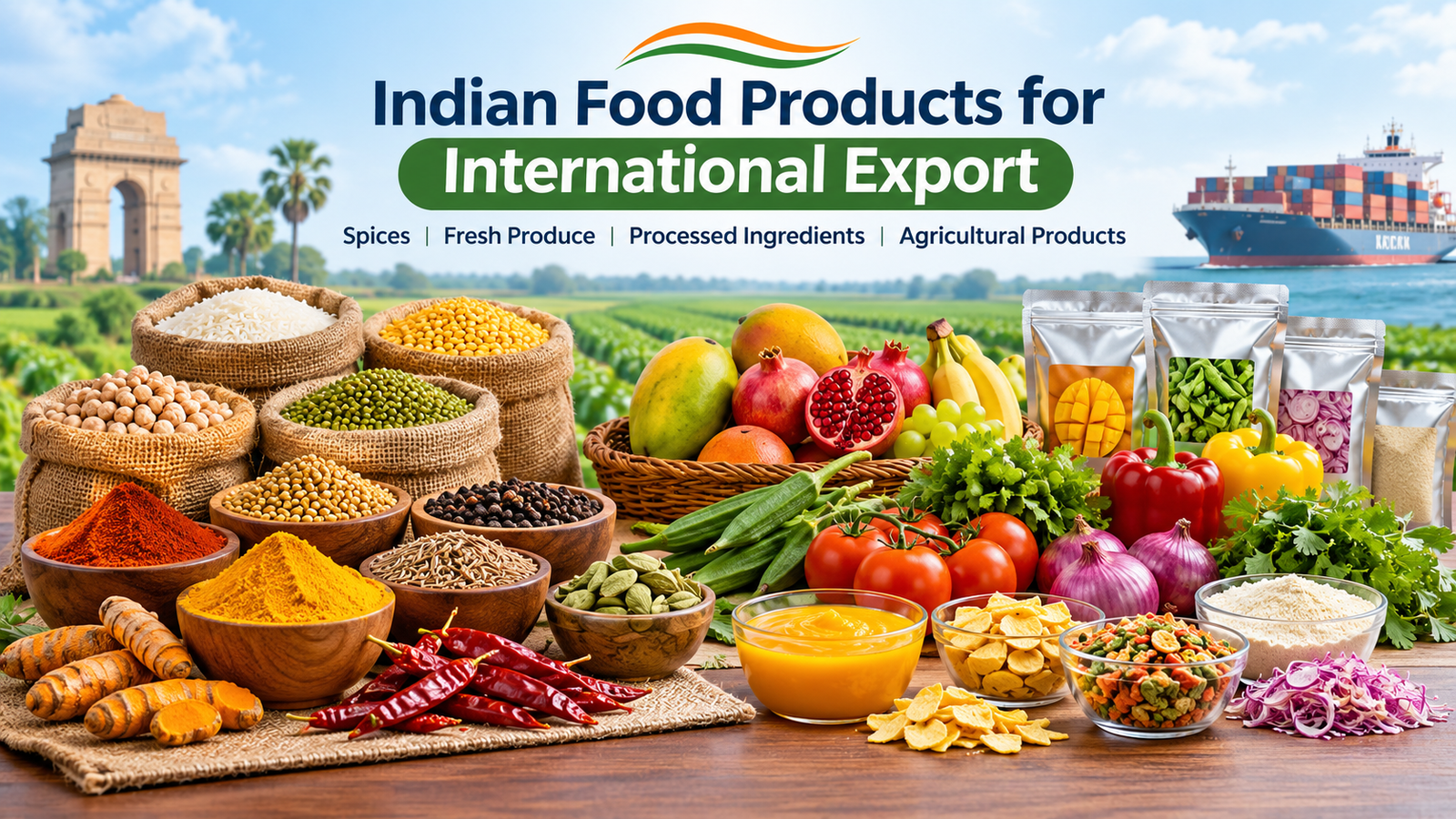
India has a long history of producing and trading spices that are used in cuisines across the world. From aromatic whole spices to finely ground seasonings, Indian spices are important ingredients for food manufacturers, wholesalers, distributors, restaurants and retail brands.
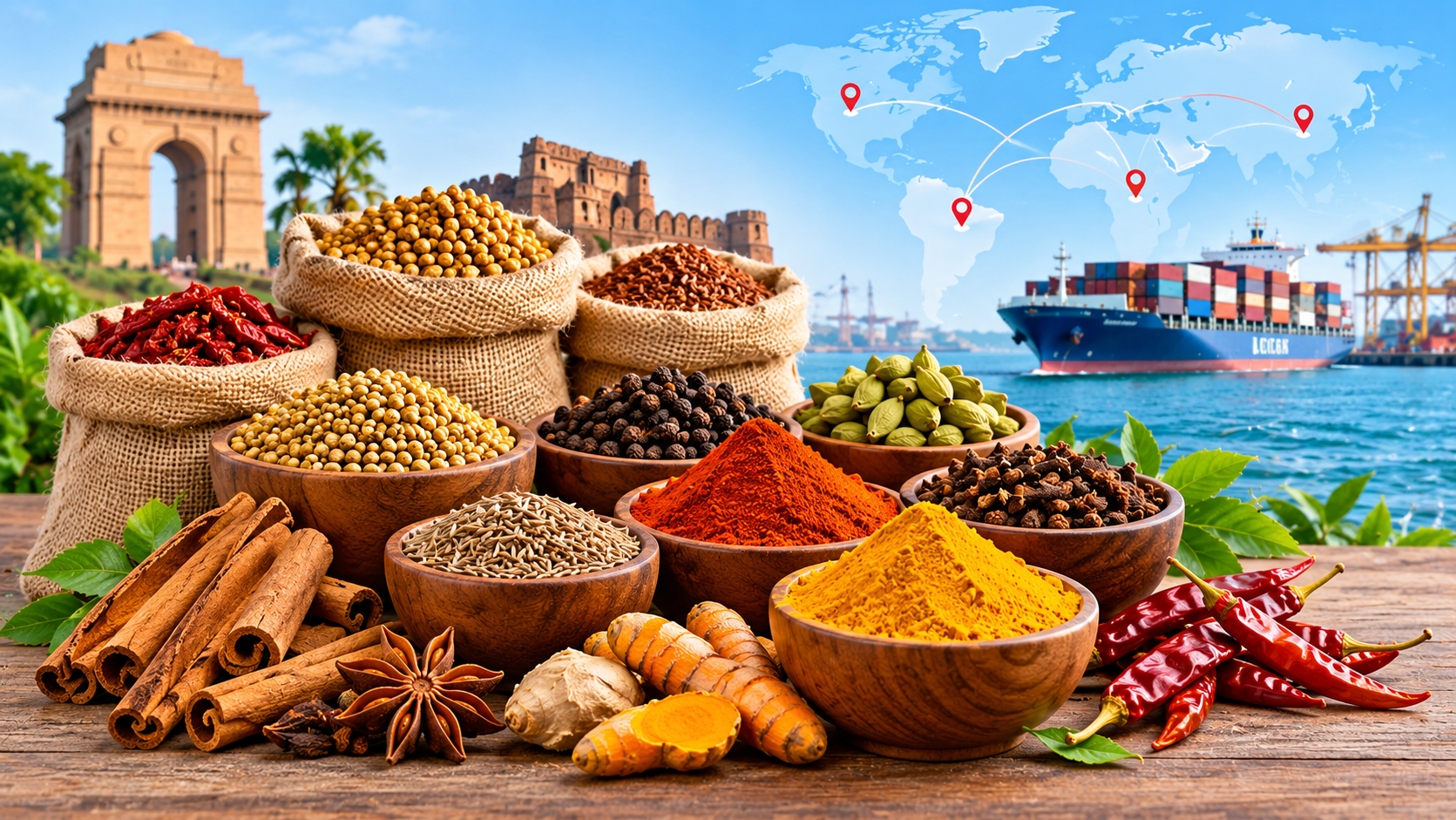
The country's diverse agricultural regions support the cultivation of several spice varieties, including turmeric, cumin, coriander, black pepper, cardamom, red chilli and ginger. These ingredients are used in traditional cooking, packaged foods, seasoning blends, sauces, beverages and commercial food manufacturing.
For international buyers, sourcing spices from India offers an opportunity to access different varieties, grades and product formats through established agricultural suppliers and processing facilities.
However, purchasing spices for international markets requires more than selecting a product and negotiating a price. Buyers must also consider purity, moisture, colour, aroma, pesticide residues, microbiological quality, packaging and destination-country import regulations.
Whether you are a spice distributor, food manufacturer, wholesale importer or private-label brand, understanding the Indian spice industry can help you make better sourcing decisions.
In this guide, we discuss popular Indian spices, their commercial applications, important quality parameters, export requirements and how international buyers can source suitable spices from India.
Executive Key Takeaways
- Indian Spice Variety: India supplies turmeric, cumin, coriander, red chilli, black pepper, cardamom, cloves and ginger in different commercial forms.
- Product Forms: Buyers can source whole, crushed, powdered and processed spices according to their manufacturing and distribution requirements.
- Quality Parameters: Evaluate moisture, purity, foreign matter, colour, aroma, microbiological quality and applicable pesticide residue limits.
- Processing and Packaging: Cleaning, sorting, drying, grading, testing and suitable food-grade packaging help prepare spices for international markets.
- Export Requirements: Documentation and regulatory requirements depend on the spice, destination country and applicable import and export regulations.
Why Is India an Important Source of Spices for International Markets?
India is one of the world's major spice-producing and spice-exporting countries. Its different climatic conditions, agricultural regions and established processing industry support the production of a wide variety of spices.
Indian spices are used in several international cuisines and food manufacturing applications. They are supplied in whole, crushed, powdered and processed forms according to buyer requirements.
Some important reasons international buyers consider India for spice sourcing include:
1. Wide Variety of Spices
India produces a diverse range of spices, including turmeric, cumin, coriander, chilli, pepper, cardamom, cloves, cinnamon and ginger.
This allows international buyers to explore different ingredients through Indian suppliers.
2. Different Product Grades and Forms
Spices are available in multiple commercial forms.
For example, turmeric can be sourced as whole fingers or powder, while cumin is commonly available as whole seeds and coriander can be supplied as seeds or ground powder.
Different grades and processing specifications allow buyers to select products according to their applications.
3. Established Agricultural and Processing Networks
India has agricultural producers, spice processors, cleaning and grading facilities, grinding units and export-oriented suppliers.
These networks support different requirements, from bulk whole spices to processed seasoning ingredients.
4. Applications Across Multiple Industries
Indian spices are used in retail food products, restaurants, seasoning manufacturers, sauces, snacks, ready-to-cook meals and industrial food production.
This makes spice sourcing relevant to a wide range of international businesses.
Which Indian Spices Are Commonly Sourced by International Buyers?
Different spices serve different culinary and commercial purposes. International buyers should select products according to flavour profiles, processing requirements, quality specifications and intended applications.
Here are some important Indian spice categories.
1. Turmeric
Turmeric is one of the most recognised Indian spices and is widely used for its distinctive colour, flavour and culinary applications.
It is an important ingredient in curry powders, spice blends, packaged foods, seasoning products and traditional food preparations.
What Are the Different Forms of Turmeric Available?
Turmeric is commonly available in:
What Quality Parameters Should Buyers Check?
International buyers should evaluate:
Curcumin content is an important specification for buyers who require turmeric for particular food manufacturing applications.
2. Cumin Seeds
Cumin is widely used in Indian, Middle Eastern, African and other international cuisines.
It has a distinctive aroma and flavour, making it a popular ingredient in spice blends, seasoning products, curry preparations and commercial food manufacturing.
Where Are Cumin Seeds Used?
Cumin is used in:
What Should Importers Check Before Purchasing Cumin?
Buyers should consider seed size, colour, aroma, purity, moisture content and foreign matter.
Cleanliness and uniformity are also important when sourcing cumin for commercial processing.
3. Coriander Seeds
Coriander is an important culinary spice used in whole and powdered forms.
It provides a characteristic flavour and is widely incorporated into curry powders, seasoning blends, sauces and packaged food products.
What Are the Commercial Uses of Coriander?
Coriander is commonly used in:
International buyers may evaluate seed size, colour, aroma, cleanliness and processing specifications.
4. Red Chilli
Indian red chilli is used across different international food markets because of its flavour, colour and heat characteristics.
Different chilli varieties offer different levels of pungency and colour intensity.
What Are the Main Applications of Indian Red Chilli?
Red chilli is used in:
What Quality Factors Matter?
Buyers should check colour, pungency, moisture, cleanliness, product grade and applicable microbiological and pesticide residue requirements.
The appropriate chilli variety depends on the desired heat level and intended application.
5. Black Pepper
Black pepper is one of the widely used spices in international food preparation.
It is commonly supplied as whole peppercorns, crushed pepper and ground powder.
Where Is Black Pepper Used?
Black pepper is used in:
Important quality considerations include peppercorn size, density, aroma, moisture and cleanliness.
6. Cardamom
Cardamom is valued for its distinctive aroma and flavour.
It is used in sweet and savoury dishes, beverages, confectionery, bakery products and spice blends.
What Are the Main Uses of Cardamom?
Buyers should evaluate pod size, colour, aroma, appearance and seed quality according to their requirements.
7. Cloves
Cloves are aromatic flower buds used in cooking, spice blends and food manufacturing.
They are available in whole and ground forms.
Their flavour and aroma make them suitable for seasoning products, sauces, bakery preparations and traditional spice mixtures.
International buyers should consider appearance, cleanliness, moisture and volatile oil-related specifications where applicable.
8. Ginger
Ginger is used in fresh, dried and powdered forms across different food categories.
It is an important ingredient in spice blends, beverages, bakery products, sauces and processed foods.
Commercial Forms of Ginger
Product selection depends on the intended application, flavour requirements and processing specifications.
What Is the Difference Between Whole Spices and Ground Spices?
International buyers can source spices in whole or ground form.
Both formats have different advantages depending on the buyer's production process and business requirements.
Whole Spices
Whole spices are generally preferred by businesses that have their own grinding and processing facilities.
They offer greater control over the grinding process and allow buyers to prepare spice blends according to their own formulations.
Ground Spices
Ground spices are suitable for manufacturers and distributors that require ready-to-use ingredients.
They reduce the need for additional grinding equipment and can simplify food production.
However, ground spices need suitable packaging and storage to protect their flavour and quality.
| Parameter | Whole Spices | Ground Spices |
|---|---|---|
| Processing | Generally supplied as whole ingredients | Already ground or powdered |
| Applications | Grinding and further processing | Direct ingredient use |
| Storage | Depends on spice and packaging | Requires protection against moisture and aroma loss |
| Handling | Additional processing may be required | Convenient for formulation |
| Buyer suitability | Spice processors and manufacturers | Food manufacturers and distributors |
The best option depends on the buyer's equipment, product formulation and intended commercial use.
How Are Indian Spices Processed Before Export?
Spice processing involves several stages designed to prepare products according to commercial specifications.
The exact process depends on the spice and its final product form.
Step 1: Raw Material Selection
Spices are sourced from suitable agricultural suppliers and production regions.
The raw material is evaluated according to variety, appearance and initial quality requirements.
Step 2: Cleaning and Sorting
The raw spices are cleaned to remove unwanted materials such as dust, stones and other foreign matter.
Sorting helps improve product uniformity.
Step 3: Drying and Moisture Management
Where necessary, spices undergo suitable drying processes to achieve the required moisture specifications.
Moisture control is important for storage stability and product quality.
Step 4: Grading
Spices may be graded according to size, colour, appearance, density or other product-specific characteristics.
Step 5: Grinding and Processing
For powdered products, spices are processed using suitable grinding equipment.
Temperature management during grinding can be important for retaining desirable flavour and aroma characteristics.
Step 6: Quality Testing
Products are checked against relevant commercial and food safety specifications.
Depending on the spice, testing may include moisture, purity, microbiological parameters, contaminants and pesticide residues.
Step 7: Packaging
Finished products are packed in suitable food-grade packaging according to the product, buyer specifications and shipping requirements.
What Quality Parameters Should International Buyers Check When Importing Indian Spices?
Quality consistency is essential when sourcing spices for international markets.
Different buyers may have different specifications depending on their industry and intended applications.
Here are some important parameters to evaluate.
1. Moisture Content
Excessive moisture can affect storage stability and increase the risk of spoilage.
Buyers should confirm the acceptable moisture specification for each spice.
2. Purity and Foreign Matter
Spices should meet the agreed purity standards and foreign matter limits.
Cleaning and sorting processes help prepare products for commercial requirements.
3. Colour and Aroma
Colour and aroma influence the suitability of spices for different food applications.
For example, turmeric buyers may focus on colour characteristics, while cumin buyers may place greater emphasis on aroma.
4. Curcumin and Essential Oil Content
Certain buyers may specify curcumin content for turmeric or essential oil-related parameters for selected spices.
These specifications should be clearly defined in the purchase agreement.
5. Microbiological Quality
Food safety requirements may include microbiological testing for organisms such as Salmonella and other relevant parameters.
The applicable testing requirements depend on the commodity and destination market.
6. Pesticide Residues and Contaminants
International markets may impose maximum residue limits and other contaminant requirements.
Buyers should ensure that products meet the applicable destination-country regulations.
7. Packaging and Storage
Suitable packaging helps protect spices from moisture, contamination and loss of aroma.
The packaging material should be selected according to the product and transportation conditions.
What Packaging Options Are Available for Exporting Indian Spices?
Packaging plays an important role in maintaining spice quality during storage and international transportation.
Different packaging formats may be used according to product type, quantity and buyer requirements.
Common options include:
Whole spices and powdered spices may require different packaging specifications.
International buyers should confirm package weight, material, labelling, batch identification and storage instructions before order confirmation.
What Certifications and Documents Are Important for Indian Spice Exports?
Export requirements depend on the product, destination country and applicable regulations.
Buyers should confirm the documentation needed before placing an order.
Some important considerations include:
Importer Exporter Code
The Importer Exporter Code issued by the Directorate General of Foreign Trade is generally required for Indian businesses undertaking export activities, subject to applicable exemptions.
Spices Board Registration
The Spices Board of India regulates and promotes the development and export of spices. Releva